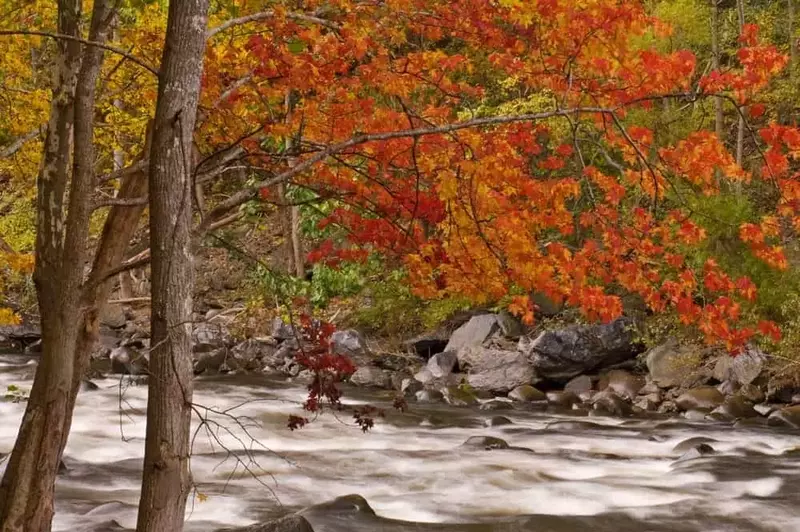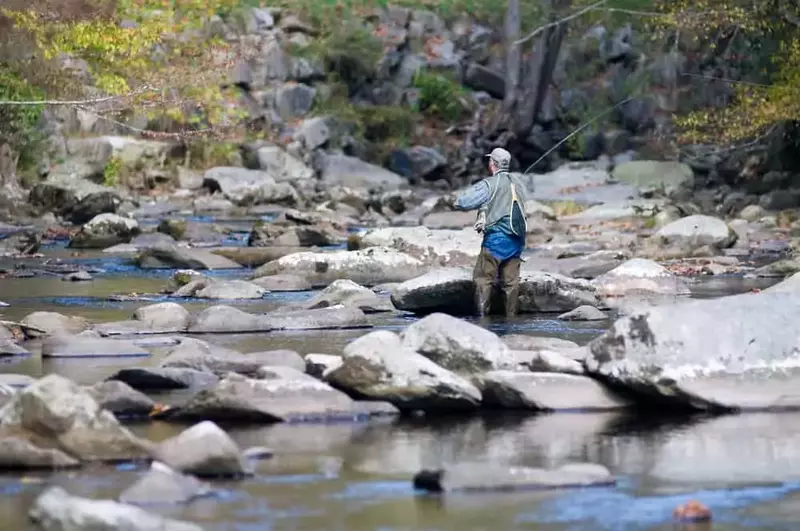
Great Smoky Mountains National Park is a perfect destination for trout fishing, as the park safeguards one of the last remaining wild trout habitats in the eastern United States! About 800,000 visitors fish for wild brook, rainbow, and brown trout every year, and you’ll find roughly 2,900 streams available for a wide array of fishing experiences! There are just a few things to keep in mind before heading into the park with your gear, so check out these 4 tips for trout fishing in the Great Smoky Mountains:
1. Ensure That You Have the Proper Permits
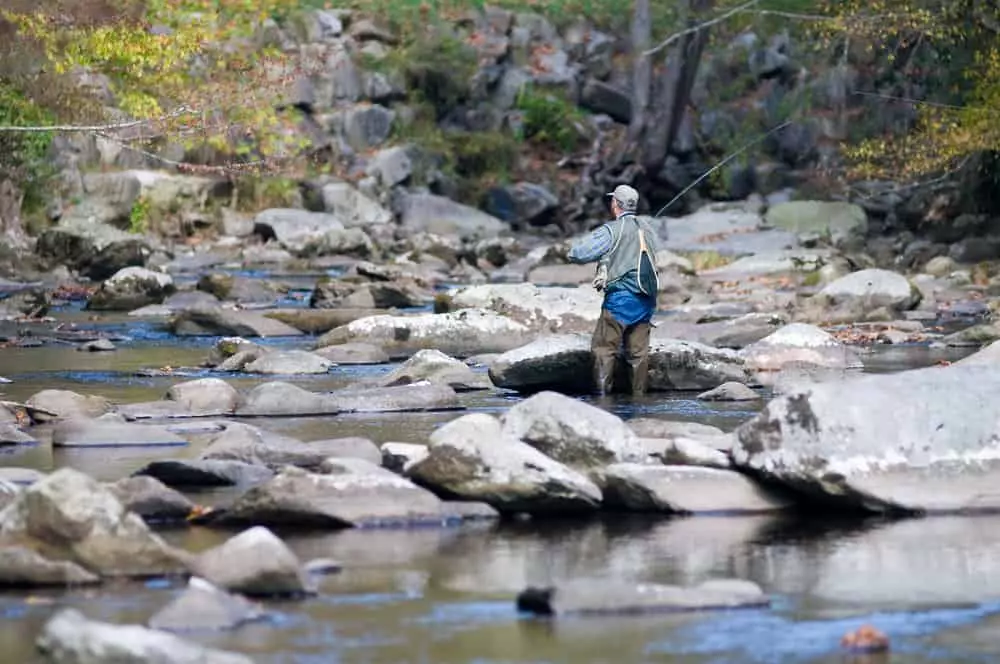
A valid Tennessee or North Carolina state fishing license is required for trout fishing in the Great Smoky Mountains. For Tennessee, this applies to both residents and nonresidents who are 13 years of age and older (those under 13 years of age in Tennessee are entitled to the adult daily bag and possession limits, in addition to being subject to all other regulations). While these permits are not for sale in the park itself, they are available at nearby retail outlets such as Nantahala Outdoor Center in downtown Gatlinburg.
2. Discover the Best Fishing Holes
You’ll find many great places for fishing in the Smoky Mountains, including the Little Pigeon River. This series of streams that flow together on the dividing line of Tennessee and North Carolina is easily accessible and loaded with rainbow and brown trout! Abrams Creek, which is located near Cades Cove, is also considered one of the best streams in the park and holds a massive population of rainbow trout! Some of the other recommended fishing areas in the park include the Oconaluftee River, Anthony Creek, Hazel Creek, and Fontana Lake.
3. Identify the Different Types of Trout in the Park
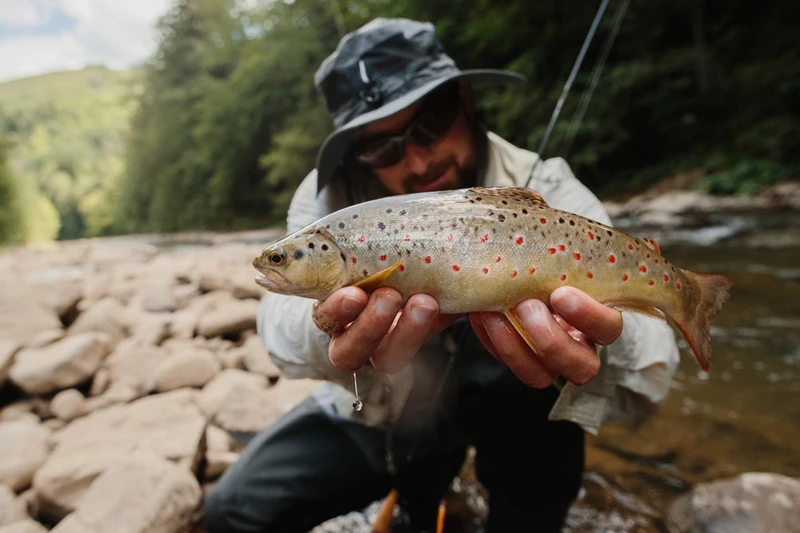
You can distinguish between the different types of trout in Great Smoky Mountains National Park by their unique color patterns. Brook trout has a dark, olive-green or blue-green body with distinctive red spots, as well as a worm-like pattern across its back. Rainbow trout has a light body, which can be silver or pale blue, with dark spots scattered across it. A striking, large pink stripe runs along its side, which makes it easy to identify. Finally, the brown trout has a light to golden-brown body with dark or red spots that have white halos around them.
4. Keep the Size and Possession Limits in Mind
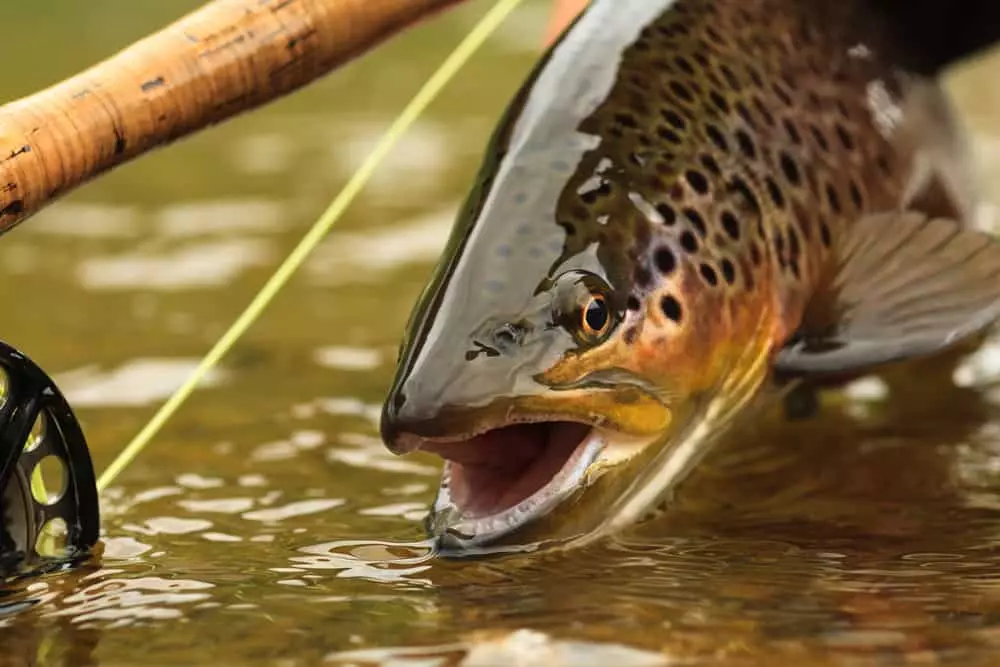
Note that the size limits for brook, rainbow, and brown trout are a minimum of 7 inches, so any trout caught less than this legal limit should immediately be returned to the water from which it was taken. As far as the possession limits, you cannot have a combined total of more than 5 brook, rainbow, or brown trout per day (regardless of whether they are fresh, stored in an ice chest, or otherwise preserved). Once the limit is obtained for the day, GSMNP requires that you stop fishing immediately.
Now that you’re ready to go trout fishing in the Great Smoky Mountains, the only thing you need is a parking tag for the national park! These mandatory tags allow you to park near any of the fishing holes in the Smokies and are available for just a nominal fee!