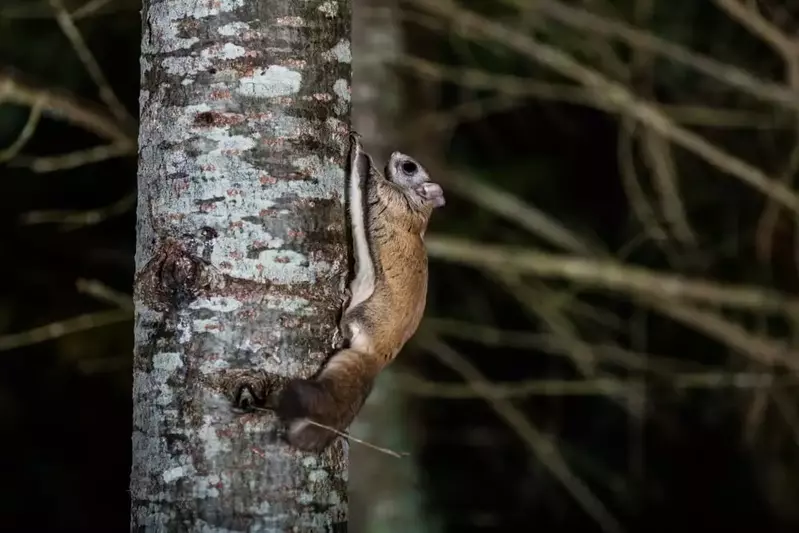
You’ll find an amazing and diverse collection of wildlife in Great Smoky Mountains National Park, including the flying squirrel! This includes both the rare and endangered Carolina northern flying squirrel, which lives in high-elevation spruce-fir forests, as well as the more common southern flying squirrel. These unique creatures represent a significant and protected part of the park’s diversity, particularly in the high-elevation ecosystems. Here are 4 fascinating things to know about the flying squirrels in Tennessee:
1. Flying Squirrels Do Not Actually Fly
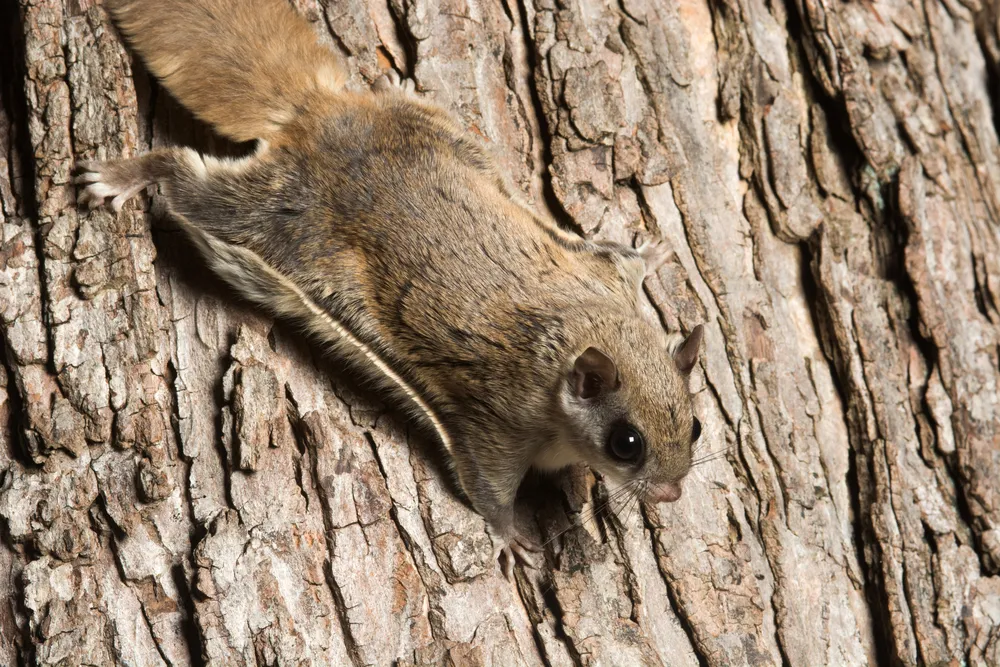
Despite their name, flying squirrels are not fully capable of flight in the same way as birds or bats. However, they are able to glide from one tree to another with the aid of a patagium, a furred skin membrane that stretches from wrist to ankle. When they glide from a higher perch to a lower one, they spread their legs, which tightens the loose skin running along each side of the body. The membrane supports the squirrel as it glides in somewhat the same fashion as a parachute, and the tail acts like a rudder. By varying the tension on their membranes and altering the position of their tail, they can control their direction and speed, always landing in a head-up position on the trunk of a tree!
2. Sleeping and Eating Habits
Another one of the fascinating things to know about the flying squirrels in Tennessee is their sleeping and eating habits! Flying squirrels are nocturnal and active throughout the year, although they may remain inactive for several weeks at a time during severe winter weather. They nest communally during the colder months, which is thought to be either a behavior for heat conservation or a social function. In fact, up to 20 or more squirrels may share a single, well-insulated cavity within a tree! As far as eating, the flying squirrel consumes a diverse diet of nuts, fungi, lichens, seeds, fruits, and tree buds, as well as insects, bird eggs, and nestlings.
3. Physical Characteristics
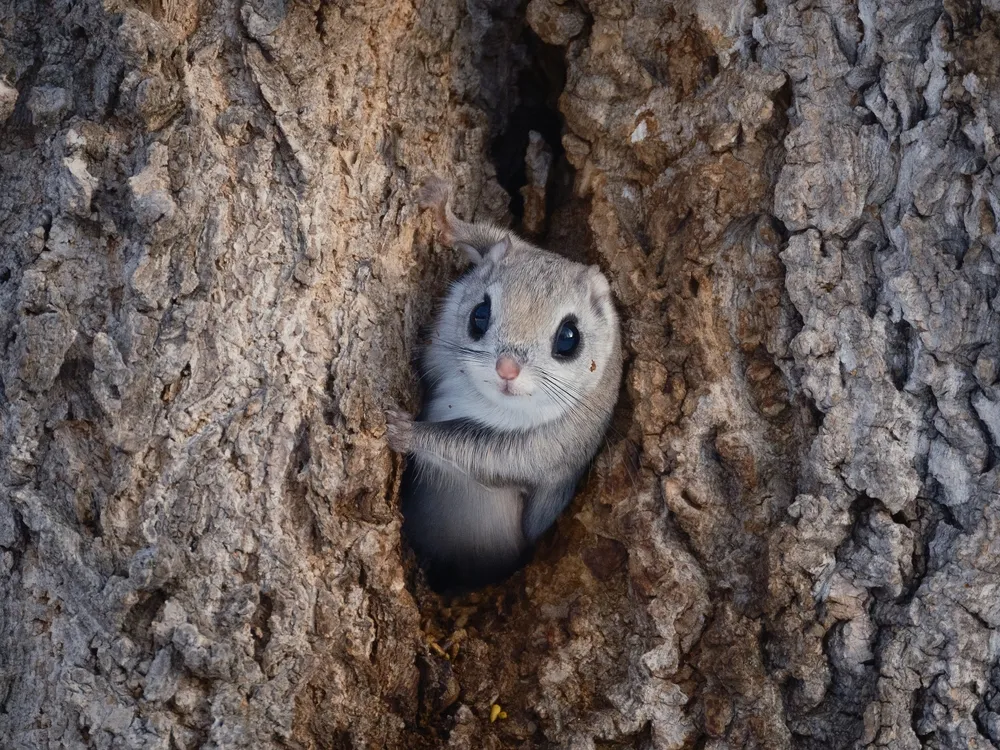
The Carolina northern flying squirrel appears similar to the Southern flying squirrel, except that it is a bit larger. While the belly hairs on the Southern flying squirrel are white to their base, the base of the belly hairs of the Carolina northern flying squirrel is typically grayish. Both types have brown upperparts and white underparts, as well as loose folds of furred skin that connect the front and hind limbs from the wrists to the ankles.
4. Life Expectancy
The life expectancy of flying squirrels in the wild is about 6 years, but the mortality rate among young flying squirrels is high due to predators and diseases. Some of the predators of flying squirrels include tree snakes, raccoons, owls, coyotes, and bobcats. One of the reasons for their nocturnal nature is that flying squirrels are not adept at escaping birds of prey that hunt during the daytime.
More Smoky Mountain Wildlife
While Great Smoky Mountains National Park is home to many of the flying squirrels in Tennessee, they are rarely seen by visitors due to their shy and nocturnal nature! If you do happen to see one while exploring the park, consider yourself extremely lucky! Here is some other wildlife in the Smokies that you’re least likely to see!